

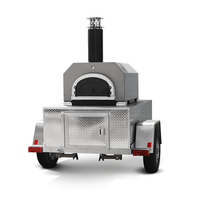

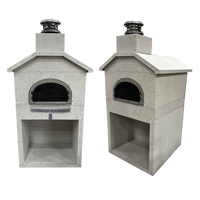
CBO-500 ovens should be installed by a professional or suitably-qualified individual.


Pesto Risotto

Support Base

The CBO-500 Oven Support Base must be constructed of masonry or metal and have at least the same area dimensions as the external footprint of the Oven.

You must check with your local Building Department to determine the amount of clearance required by local building codes between the Oven and Decorative Cover. CBO recommends you add at least 8″ for the width (4″ per side) and 5″ for the depth (on the back side of the Oven) to accommodate the Decorative Cover and Insulation.

CBO recommends that you not use any combustible materials in the construction of the covering (Shroud) of the Oven. All building materials used near the Oven, Metal Damper assembly and Flue Pipe should be non-combustible and never made of wood.

The Support Base surface must be flat, level and strong enough to support the total combined weight of the Oven (300 lbs.) and the Decorative Cover design you choose.

The two vertical support feet of the Support Base are typically made of concrete block. The horizontal Support Base is typically made of a 4″-thick, steel-reinforced concrete slab. The standard height of the horizontal part of the Support Base is 42.”

NOTE: Imagine the Oven’s Support Base as a table. The table’s legs are concrete blocks and the tabletop is a 4″-thick concrete slab. To build the Support Base, you build the support legs out of concrete block, then on top of that leg base, you build a frame to pour a concrete slab (the tabletop). On the concrete slab (the tabletop), you position the Sub-hearth Insulation Boards, then the Hearth, then the Oven.


Pesto Risotto

Hearth Insulation
Sub-hearth Insulation Board (supplied)

Your CBO-500 Oven comes with an Insulation Board (shipped in three pieces) that is placed under both pieces of the Hearth for insulation.

Place the Insulation Board between the Oven and Support Base. Do not use any materials (mortar, cement, glue) to attach the Oven to the Insulation Board. It is very important that the entire Oven Base come in contact with the Insulation Board.

There should be no holes in the Insulation Board since there is a gap inside the Oven, between the Hearth and the Dome. Ash and embers should build up in this space and not fall through under the Oven.

The Insulation Board must be cut so that it is flush or slightly set back with the front end of the Hearth, the Support Base and the two vertical support feet in order for the final Decorative Cover to fit properly and protect the Insulation Board from exposure to moisture. The Insulation Board can be cut-to-size with a regular jigsaw.

The Oven’s decorative finish should be built on top of the Support Base, not on top of the Insulation Board. Remember, the Insulation Board should not be exposed to the elements and should not get wet.


Pesto Risotto

Hearthstone (Hearth)

The two-piece CBO-500 Hearthstone (Hearth) should be placed on top of the Insulation Board with the front face of the Front Hearth lined up in front of the front face of the Insulation Board, or slightly hang over the Insulation Board. The Sub-hearth Insulation should not be exposed to the elements and should never get wet.

NOTE: The Hearth Insulation shown in this drawing is a concrete base. Use the Sub-hearth Insulation Board (supplied) for your Oven’s Hearth Insulation. (The Oven pictured is our CBO-750, but the concept is the same for the CBO-500.)


Step-by-Step Assembly Instructions


Pesto Risotto


Step 1

Line the Front Hearth piece up with the front of the Oven base. As you can see, the Insulation Board is not exposed to the elements and covers the entire Main Hearth.


Pesto Risotto


Step 2

Push the Main Hearth in place so there is a tight fit with the Front Hearth. Once again, the Insulation Board should be under the Main Hearth and there should be nothing between the Hearth and Insulation.


Pesto Risotto


Step 3

Remove the Front Hearth piece and place the Dome over the top of the Main Hearth. Make certain the front of the Oven is lined up, then replace the Front Hearth. Attach the Flue Adapter to the top of the Oven.


Pesto Risotto


Step 4

Lay the Insulating Blanket over the top of the Oven. Cut out a hole for the Flue Pipe, and cut the Insulation to line up with the front of the Oven. If you have any extra insulation, put it on the top of the Oven.


Pesto Risotto


Step 5

Cut the back of the Insulation with a razor blade and tuck it into place. Pull the sides of the Insulation around the back of the Oven. You can tie the Insulation with metal straps, or aluminum tape, or just leave it in place.


Pesto Risotto


Step 6

In this picture, you will see we have a Metal Shroud. If you are building a Stone or Brick Shroud, it should follow the contour of the Oven, but not rest on the Arch.


Pesto Risotto


Step 7

Your are now ready to mortar the Arch to the Dome. Use the refractory mortar provided to completely seal the space between the Arch and Dome. You will also put some mortar on the Front Hearth under the Arch.


Pesto Risotto


Step 8

You don’t need too much mortar, just enough to make a seal. Place the mortar all the way around the Arch and on the Hearth on both sides under the Arch.


Pesto Risotto


Step 9

Be very careful to not get any mortar in the mounting holes for the Arch and Door. If you do get mortar in the holes, attempt to clean it out immediately; the bolts will not go in all the way if mortar is present.


Pesto Risotto


Step 10

Line up the Arch and put the two top bolts in place. Tighten the bolts to hand-tight. Upon completion of the install, you will tighten the bolts more; at this time you just want to hold the Arch in place.


Pesto Risotto


Step 11

Attach the Metal Door and insert the bolts to hold it in place. Once you have all four bolts in place, you should tighten them, but do not force it. You should create a nice seal between the Arch and the Dome with the mortar you used.


Pesto Risotto


Step 12

Use some mortar to finish off the install. If the Shroud is brick or stone, you should also use mortar around the top of the Arch. If you are using a Metal Shroud, use a high-temp silicone on the top of the Arch to seal the joint with the Shroud.


NOTE: Each year you will need to touch-up the mortar and/or silicone for cosmetic reasons.


Pesto Risotto

Chimney

When building the Chimney, it is important to refer to your local building code standards.

Every CBO-500 Oven comes with a standard Anchor Plate that works with a Simpson Duravent Stainless Steel Double Wall Pipe (Model #9405SS).

You can buy this pipe in 24″ sections from any local Simpson Duravent dealer.

One 24″ pipe section is the minimum. You can add additional 24″ sections as required. (The chimney pipe cannot have a total bend of more than 360°. ) The taller the stack is, the further away the exhaust is from the cook!

NOTE: Never use any combustible materials near the Anchor Plate or Flue Stack. We recommend a minimum 6″ of air space between the Anchor and Flue and any combustible material.

Again, check with your local Building Department to ensure you adhere to local building codes!


Pesto Risotto

Arch Dome Insulation Blanket

Very important for correct functioning and life of the CBO-500 Oven!

The Oven Dome must be covered with the supplied Ceramic Fiber Insulation Blanket. The Blanket, which withstands high temperatures, should cover the entire surface area of the Dome. You can cut the Ceramic Fiber to insulate around the Metal Damper assembly. Since most heat loss will occur at the Metal Damper and top of the Oven, you should ensure these spots are well-insulated. You can choose to insulate the Oven further by packing Vermiculite or other non-flammable insulating material above the Blanket.

The better you insulate your Oven, the better it will perform!


Pesto Risotto

Operating Instructions

Please follow these instructions exactly as written. Failure to follow instructions may cause permanent damage to your Oven and your warranty may be void.

Although your Oven may seem dry once you complete the installation process, there are small amounts of moisture pockets that need to work their way out. If you build a large fire in your Oven from the onset, you could compromise your Oven’s longevity and cooking efficiency, and can ultimately cause permanent damage, which may void the manufacturer’s warranty.

When lighting the first fire, keep the flames low so the moisture can be slowly released from the Oven and surrounding masonry work. This curing process should be conducted at a temperature as close to 212°F (100°C) as possible (do not exceed that temperature) over a 2- to 3-day period.

A good suggestion is to build a fire in a separate location and place the coals into the Oven. You will generate heat without the flame and the Oven will cure as required.

Due to thermal expansion, small cracks will appear in the Dome or Hearth during the curing and cooking process. Do not worry; this is normal and the quality of your Oven will not be compromised.

After you have cured your Oven and are ready to start cooking, light a small fire and slowly build it up. The interior Dome of the Oven will at first turn black from the fire smoke, You will know the Oven temperature has reached 700°F when the inner walls turn from black to a whitish grey. This is a perfect temperature for many types of cooking.


Other Cautions

  • CBO-500 Ovens are designed and marketed for “outdoor residential use” only. Local regulations about wood-burning equipment should be consulted.
  • CBO-500 Ovens should be installed by a professional or suitably qualified individual.
  • Do not throw chunks of wood violently into the Oven.
  • Each time you light a fire, make sure the fire covers as much of the Hearth surface as possible.
  • Always use dry wood (dried for at least two years)! If you see moisture coming from the logs while they are on the fire, the wood is not dry. Using wood that is not dry will cause the Oven to throw off a considerable amount of smoke and can also cause damage to the Oven because of the high moisture content.
  • The first two times you cook in your new Oven, cook something simple (for example, a pizza shell) then throw it away without actually eating what you have cooked. The third time, you can begin enjoying what you have cooked in your new Oven.
  • Always pre-warm any cooking accessory (the CBO grill, a cast iron pot, etc.) before you put it in the Oven. If you place a cold accessory on a hot Hearth, the thermal shock may cause the Hearth to crack. You can also add an Oven Rack so the pot or pan doesn’t sit directly on the Hearth.
  • Please use extreme caution around the Oven. The Oven Dome, Hearth, Arch and Door will be extremely hot when in use and for hours after use.
  • Never allow anyone under the age of 18 to operate the Oven.
  • The manufacturer is not responsible for eventual environment damages, nuisance or smoke and carbon particles.


Regular Maintenance

Your CBO-500 Oven will last years if you follow these simple, regular maintenance tips:

  • Brush out the ash after each use with your CBO Wire Brush.
  • Never use any cleaning products inside the Oven! Heat the Oven properly to clean it.
  • The Decorative Door will occasionally show wear. Take a piece of steel wool to the Door, lightly, and repaint the door with black Stove Pipe Spray Paint available at your local hardware store.
  • Lubricate the Decorative Door hinges on a regular basis.
  • Inspect the Flue Connection/Anchor Plate on a regular basis. Make sure it is free from any buildup. If you have buildup, you can use a wire brush to clean it.
  • Inspect the Flue Pipe on a regular basis. Make sure it is in good repair and is seated securely into the Flue Connection/Anchor Plate. If you are using a Single-Wall Pipe, check for rust. If rust is found, replace the Flue Pipe.
  • Inspect your Flue Cap to ensure there is no buildup blocking the flow of air. If you have any buildup, you can use a wire brush to clean it.
  • Touch-up the mortar around the Arch to maintain a nice finished look. You can use any refractory mortar found at your local hardware store.
  • If you use the CBO Metal Shroud in your install, cover the Shroud when not in use. The Oven must be cool to the touch before it can be covered.


If you have any questions about the use and care of your CBO-500 Oven, please send us an email to info@chicagobrickoven.com.